OPTIONS | Transitions to Independence
Executive Functioning
Executive Functioning and Study Skills Support After High School
Students develop practical systems for planning, organization, time management, task initiation, self-advocacy, and consistent follow-through.
Systems Students Practice
Students build practical systems for calendars, planning, project breakdown, time estimation, organization, study routines, assignment tracking, and self-advocacy. These strategies are taught in direct connection to the student’s actual schedule and responsibilities rather than as isolated study tips.
Strategies Applied to Real Responsibilities
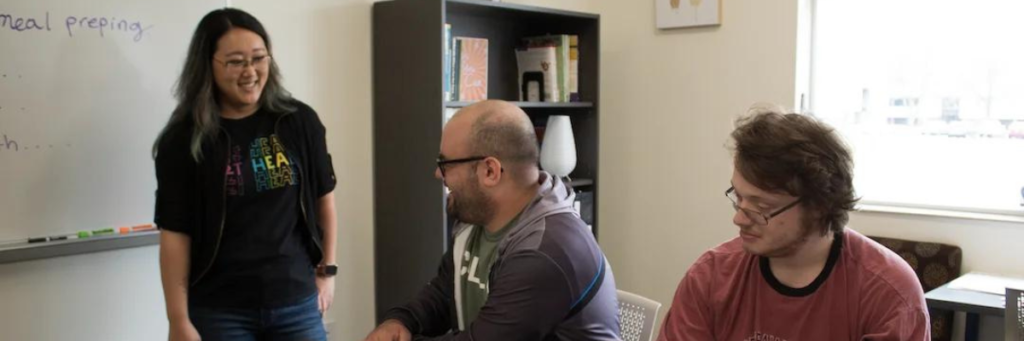
Executive functioning strategies are reinforced during college coursework, OPTIONS classes, vocational experiences, study hours, apartment routines, and community commitments. The purpose is generalization: students learn to use the same planning and follow-through systems when no one is standing beside them.
Self-Advocacy Is Part of Executive Functioning
Students also learn to recognize when they need support, ask effective questions, clarify expectations, communicate with instructors or supervisors, and use accommodations appropriately. These are essential skills for functioning in adult systems where support is available but must often be requested.
Executive Functioning in Action
Systems for Planning, Starting and Following Through
Post-secondary success depends on more than understanding the material. Students need reliable systems for time management, organization, prioritization, task initiation, studying and communicating when something is unclear. OPTIONS reinforces these skills across academic, vocational and independent living settings so the same strategies are practiced in real adult routines.
- Calendars, schedules and time awareness
- Breaking assignments and responsibilities into manageable steps
- Organization and preparation for classes or work
- Self-advocacy, follow-through and accountability
Systems Students Practice
- Using calendars and planning systems
- Breaking assignments into manageable steps
- Estimating time more accurately
- Organizing materials and responsibilities
- Preparing for exams and projects
- Communicating with instructors
- Using accommodations appropriately
- Balancing academics, work, and daily living
Strategies Applied to Real Responsibilities

Start a Conversation
A Clearer Path Forward Starts With Understanding Fit
OPTIONS does not expect independence all at once. An admissions conversation is a practical first step to understand readiness, support needs, and whether the program aligns with your student.
Admissions Conversation
Begin with a confidential conversation focused on fit, not pressure.
Start a ConversationQuestions about readiness, timing, academics, living, or vocational pathways are welcome.
admissionsinfo@brehm.orgConnected Support
How This Connects Across OPTIONS
Study Skills is embedded within the broader academic support model for students with learning disabilities.
These systems support students participating in the college transition pathway.
Planning and follow-through also transfer into the vocational training program.
The same executive functioning systems are practiced in independent living routines.
Responsibility increases through the three-phase transition model.
Start a Conversation
A Clearer Path Forward Starts With Understanding Fit
OPTIONS does not expect independence all at once. An admissions conversation is a practical first step to understand readiness, support needs, and whether the program aligns with your student.
Admissions Conversation
Begin with a confidential conversation focused on fit, not pressure.
Start a ConversationQuestions about readiness, timing, academics, living, or vocational pathways are welcome.
admissionsinfo@brehm.org